 Back to the University website
The Department of Biology at the College of Education for Girls Holds an Official Awareness Workshop on the Reality of Drugs in Iraq and Strategies to Curb Their Spread
Scan with a phone camera to open the article. Suitable for posters and notices.
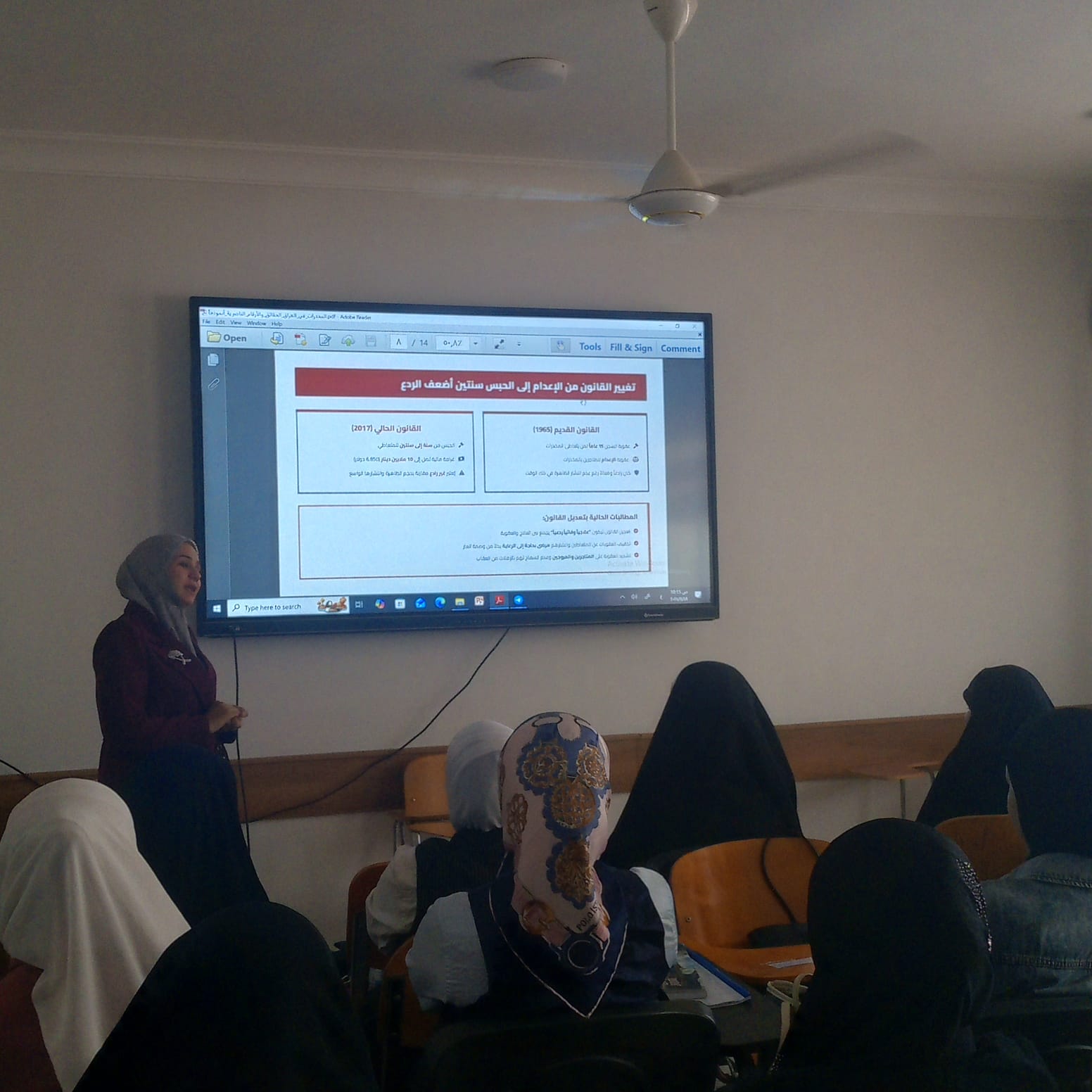
Under the patronage of the Office of the Prime Minister / the National Committee Supporting Community Awareness and Guidance, and under the direct supervision of the President of the University of Shatrah, Prof. Dr. Basim Abdul-Hussein Jarallah, and the Dean of the College of Education for Girls, Prof. Dr. Afrah Abd Al-Maktouf, the Department of Biology held an awareness workshop presented by faculty member Ms. Zahraa Flaih Hassan.
On Tuesday, 18/11/2025, a mobile awareness workshop was held in the halls and laboratories of the College of Education for Girls – Department of Biology, addressing the phenomenon of the spread of drugs in Iraq, with a focus on Dhi Qar Governorate / Nasiriyah as a model of the situation in the south. The workshop included an in-depth discussion of the causes of this phenomenon and its health, social and economic effects, as well as a review of the main proposed solutions to curb its spread.
Main Themes of the Workshop
First: The Scale of the Problem
-
Seizure of 28 tonnes of drugs over the past three years.
-
Arrest of more than 43,000 suspects for drug trafficking or use.
-
Widespread prevalence of crystal meth and shabu, at a rate exceeding 70%.
Second: The Most Affected Groups
-
Young people aged 15–30 years are the most affected group.
-
90% of users are men, compared with 10% women.
-
Rates of use in poor areas rise to 70%.
Third: Causes of the Spread in Nasiriyah
-
Geographical proximity to the Iranian border.
-
High rates of unemployment and poverty.
-
A shortage of specialised rehabilitation and treatment centres.
Fourth: The Devastating Effects of Drug Use
-
Health: addiction, infectious diseases, brain damage and deaths.
-
Social: family breakdown, social stigma and rising crime.
-
Economic: loss of youth potential and rising treatment costs.
Fifth: Proposed Solutions
-
Legislative: amending laws to focus more on treatment rather than punishment.
-
Security: strengthening border control and developing field procedures.
-
Health: establishing specialised treatment clinics in every governorate.
-
Awareness: carrying out awareness campaigns in schools, universities and mosques.
-
Economic: providing real job opportunities for young people.
At the conclusion of the workshop, it was affirmed that:
"Confronting drugs is a shared responsibility that requires the combined efforts of all – from the family to the school to the government and civil society. Together we can protect the future of our youth."
#Together_Against_Drugs
#Awareness_Is_Protection