 Back to the University website
The Limits of Freedom of Expression on Social Media Platforms and the Position of Divine Legislation and Laws on Them

Scan with a phone camera to open the article. Suitable for posters and notices.
Under the gracious patronage of the President of the University of Shatrah, Prof. Dr. Basim Abdul-Hussein Jarallah, and with the supervision and support of the Dean of the College of Education, Prof. Dr. Safaa Hussein Ali, and stemming from the University's vision of consolidating cultural and legal awareness and promoting responsible academic discourse, a scientific workshop was held entitled:
“The Limits of Freedom of Expression on Social Media Platforms and the Position of Divine Legislation and Laws on Them”
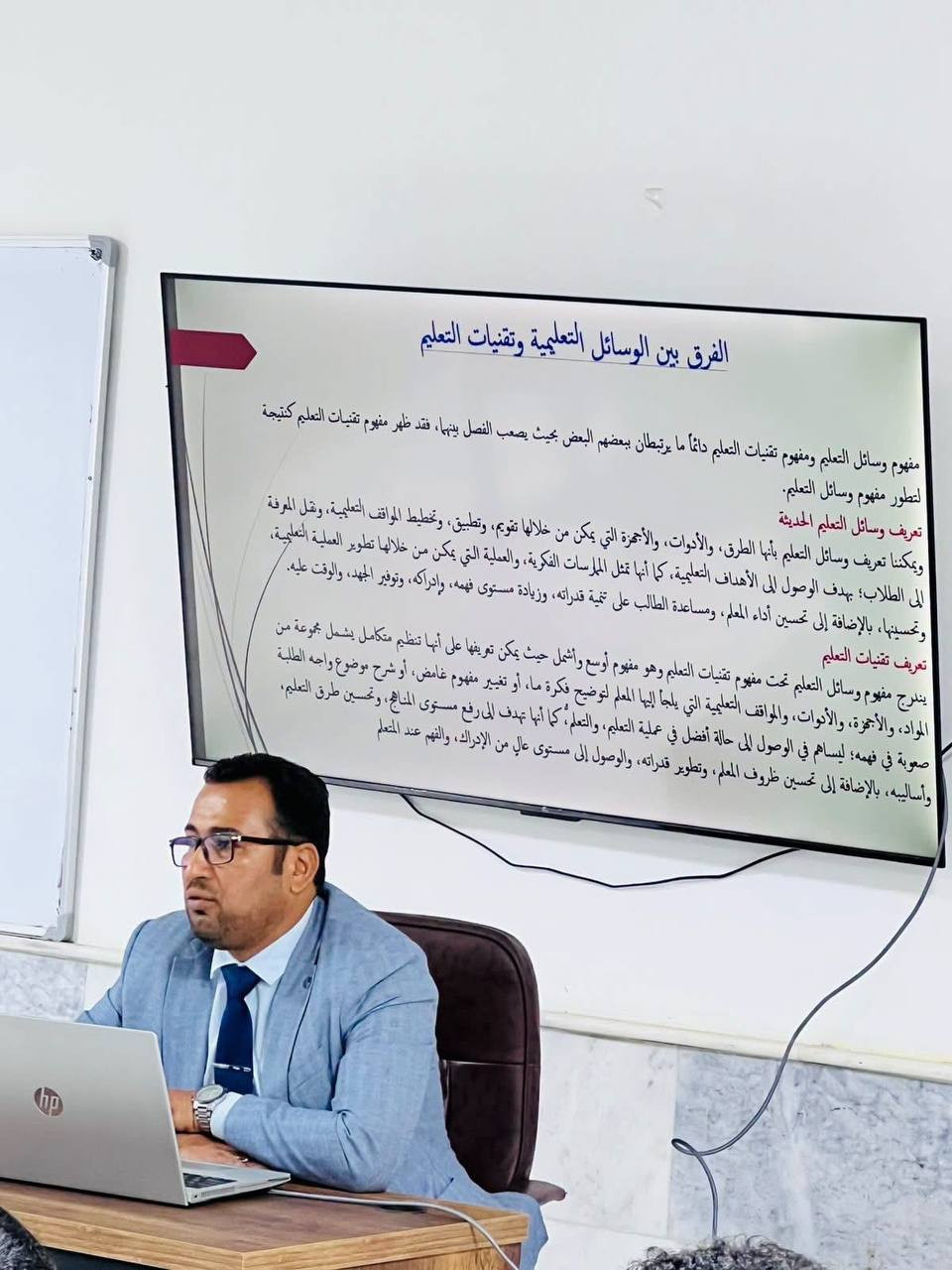
The workshop was delivered by Asst. Lect. Saud Shnayar Khafi, who addressed one of the most prominent contemporary intellectual and legal issues related to the expansion of the digital communication space and its direct influence on shaping societal awareness. He reviewed the concept of freedom of expression and its ethical and legal limits, and the difference between freedom of opinion and infringing on the rights of others or violating societal and human values.
The workshop also addressed the position of divine legislation and man-made laws on issues of electronic publishing and the legal and ethical responsibilities associated with them, emphasising that freedom of expression is a legitimate right guaranteed by religious laws and statutes, yet it remains bound by controls that preserve human dignity, safeguard intellectual and social security and prevent hate speech, abuse or defamation.
The workshop saw distinguished academic attendance and scientific interaction, reflecting the importance and timeliness of the topic in light of accelerating digital transformations. It contributed to promoting a culture of informed dialogue and consolidating the principle of responsibility in the use of social media, in keeping with the University's mission of building sound knowledge-based awareness and an academic community more aware of the challenges of the age.